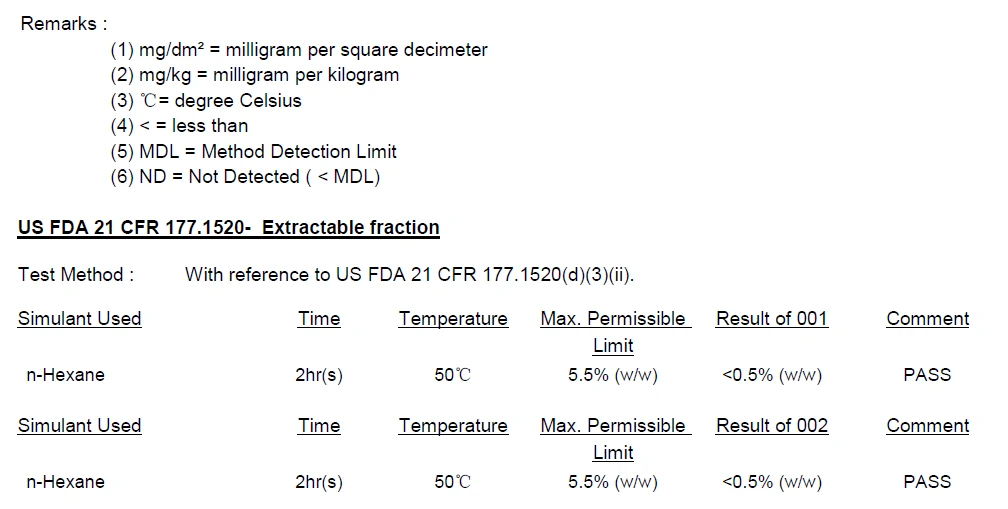
Some foods like beef jerky, nuts and meat snacks are high in oil. Labs use n-hexane to simulate fatty food. Film samples get soaked in the solvent at 50°C for 2 hours. After evaporating the solvent, technicians weigh the solid residue and calculate the percentage of substances that can leach out.
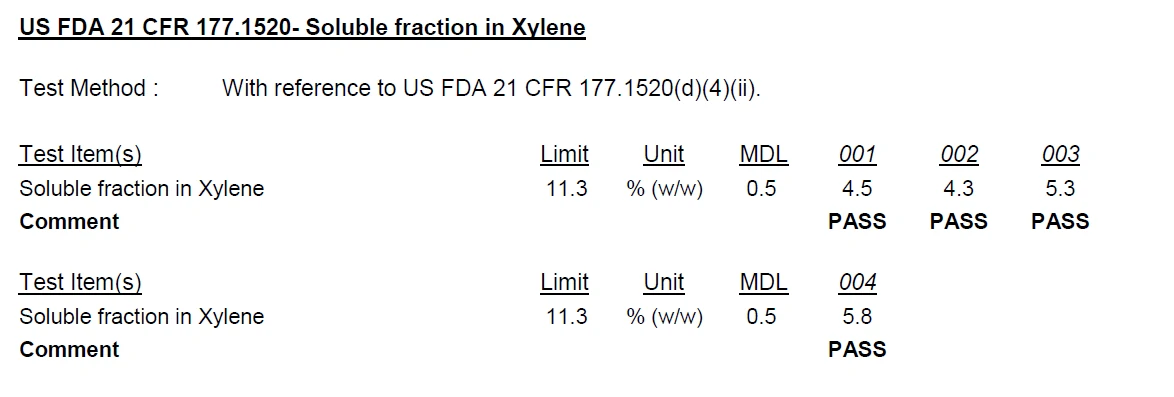
Soluble fraction in Xvlene
Max Limit : 11.3% (W/W)
Our Test Result: Less 5.3% (W/W)
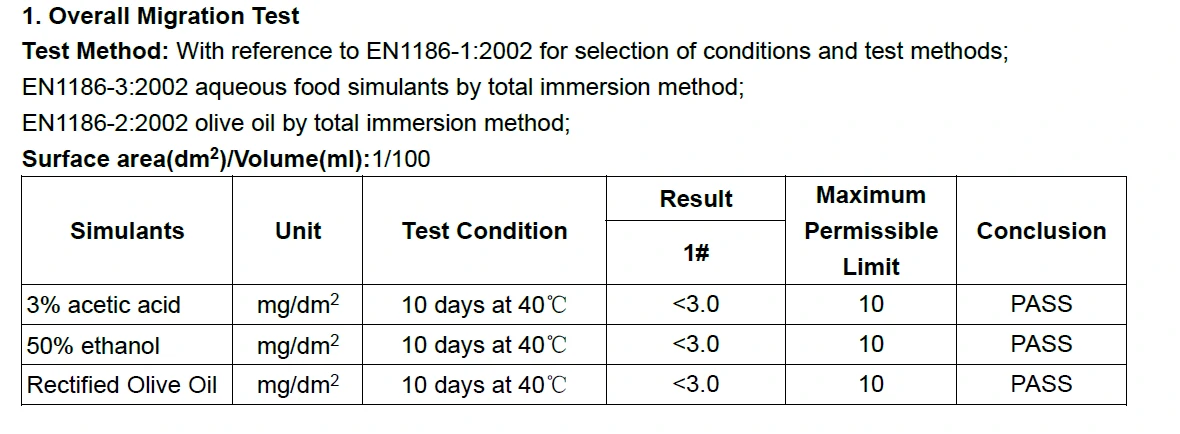
EU- EN 1186: 2002
Overall Migration Test
Max Limit : 10 (mg/d㎡)
Our Test Result: Less 3.0 (mg/d㎡)
We use specially formulated solutions to mimic three food types: acidic food such as tomato sauce and pickled goods, alcoholic food, and high-fat food including beef jerky, nuts and meat products.
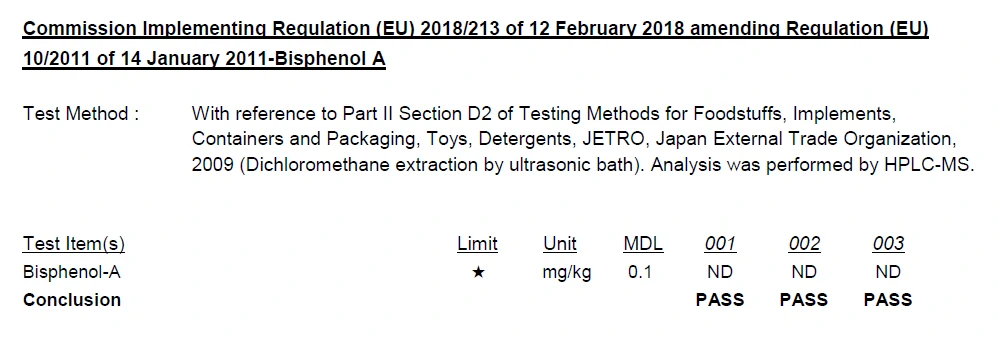
EU
- Reaulation 2018/213
Bisphenol A
Prohibited
Our Test Result : Not Detected
BPA is harmful to humans and seriously disrupts your endocrine system. Plastic film itself doesn’t contain BPA, but cheap laminating adhesives, printing inks or contaminants from recycled plastic might have it.
REACH
EC 1907/2006 & EU1272/2013
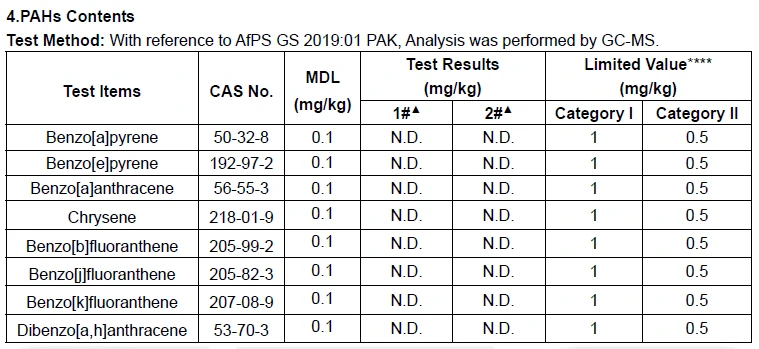
PAHs Contents
Max Limit : 0.5 mg/kg
Our Test Result: Not Detected
Laboratories mainly test for 9 types of PAHs (polycyclic aromatic hydrocarbons). PAHs mostly come from recycled plastic, low-grade ink and mineral oil. Virgin food-grade plastic does not contain PAHs.
Levels below 0.5 mg/kg are safe for prolonged skin contact. At 1 mg/kg, only short-term contact is allowed.
REACH
EC 1907/2006
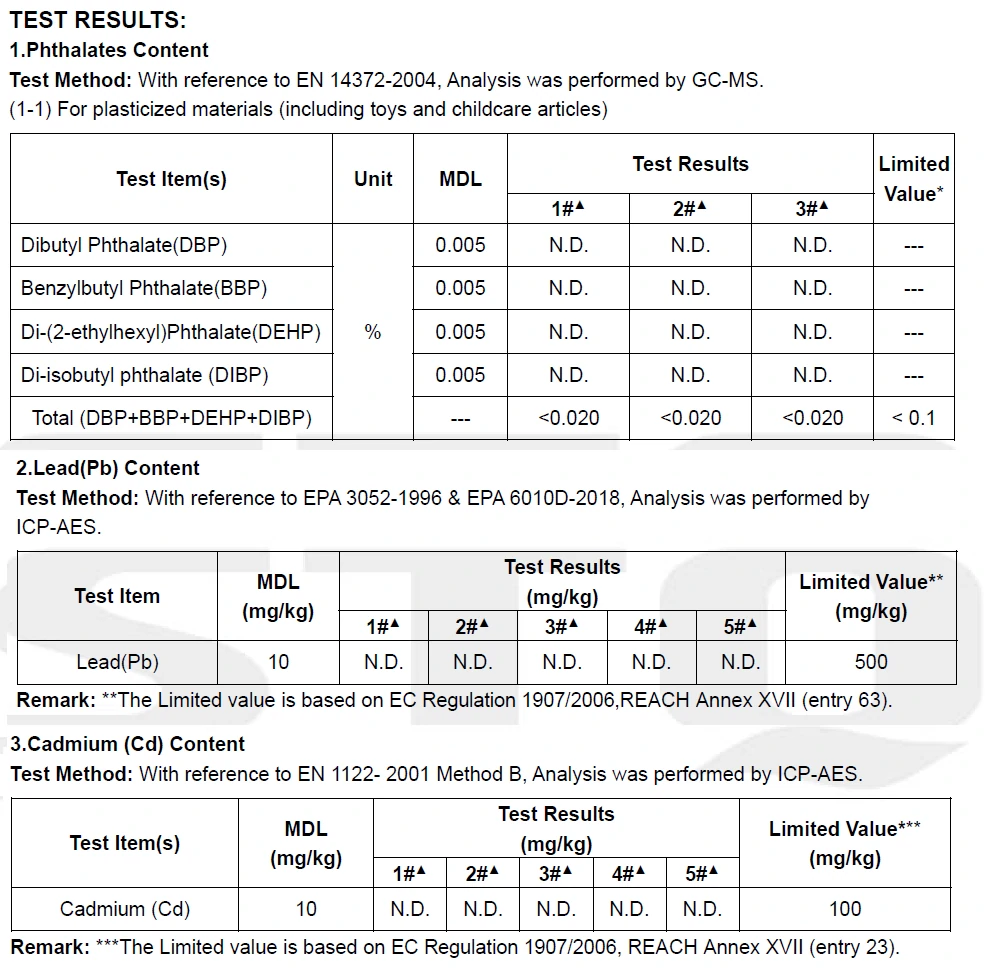
Heavy Metal
Prohibited
Our Test Result : Not Detected
Phthalates are endocrine-disrupting chemicals. Lead and cadmium are heavy metals that damage organs once consumed.
This test checks whether these substances exist inside the material itself, instead of testing if they migrate from packaging. That means the requirements are even stricter. Our pouches contain no toxic substances or heavy metals, so you can use them with total peace of mind.
REACH
EC 1907/2006
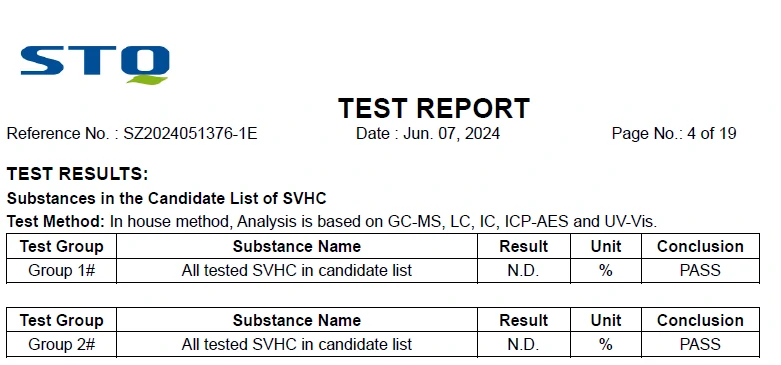
SVHC Contents
Max Limit : 0.005%
Our Test Result : Not Detected
SVHC stands for Substances of Very High Concern. The list covers carcinogens, endocrine disruptors, persistent environmental pollutants, and more.
There are now around 240 substances on the candidate list.