Table Of Contents
- Freezer burn is caused by unsuitable packaging
- Frozen foods require special frozen bags
- Material of packaging for frozen food
- Frozen packaging bags require laminated structure
- Coextruded film frozen food bag
- Vacuum Sealing Frozen Food Bags
- Vacuum Frozen bag thickness
- Modified Atmosphere Packaging for Frozen Foods
- Vacuum Skin Packaging for Frozen Food
- Truth about recyclable frozen Packaging
- PBAT/PLA sustainable frozen food packaging
Frozen Food Packaging Guides for Brands and Manufacturers
This blog will tell you how to choose the right packaging bags for frozen foods. What a frozen food bag actually has to do, which film structures are worth the money, and all types of plastic frozen packaging bags.
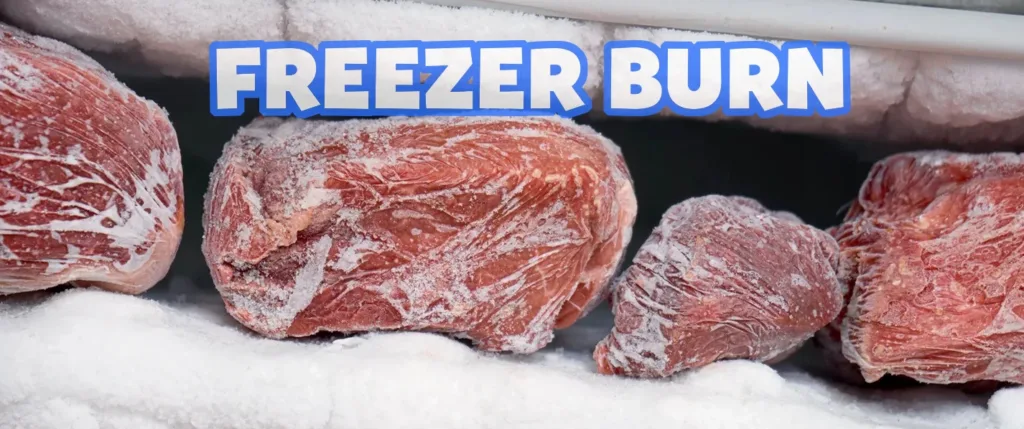
When you open a bag of frozen chicken breasts at home. You may find one of them has dry, grayish-white patch on the surface. It almost looks burnt.
You might start to wonder if it has spoiled or been contaminated. But that’s freezer burn, and it happens because the packaging bag you used is not suitable for putting in the refrigerator.
Freezer burn is caused by unsuitable packaging
Inside a refrigerator, the temperature and water vapor pressure are:
food surface > surrounding air > refrigerator.
The pressure difference leading to water vapor transfer and oxidation reactions is the main cause of freezer burn.
When a bag is not a good enough barrier, the ice on the food surface turns directly into vapor, without melting. This process is called sublimation. It makes the surface dry and porous. Then the oxygen that has leaked in starts to oxidize the fat and the color of the food.
So the first job of a frozen product packaging is not the look, or the shape, or the print. Its real job is to keep moisture inside and oxygen outside.
Frozen foods require special frozen bags
- Stay flexible at −18°C instead of turning brittle
- Keep oxygen out, so fats and seafood do not go rancid
- Keep moisture in, to stop the sublimation problem
- Resist puncture, because bones, fish spines and hard frozen edges can easily poke through
- Strong heat seal strength, so the bag does not leak when it goes through temperature changes
- The material is safe to come into contact with food.
Material of packaging for frozen food
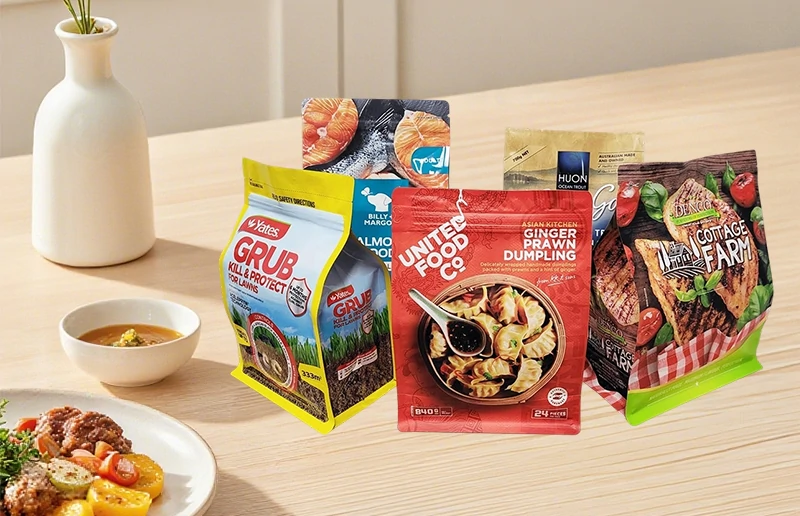
Frozen food packaging materials can withstand low-temperature environments.
| Material | Temperature Range | Common Thickness |
|---|---|---|
| Polyethylene terephthalate (PET) | -60°C to 240°C | 12 µm, 15 µm, 19 µm. |
| Biaxially oriented polypropylene (BOPP) | -50°C to 120°C | 19 µm, 28 µm, 38 µm. |
| Polyethylene (PE) | -60°C to 90°C | 40–150 µm. |
| Nylon (BOPA) | -60°C to 200°C | 15µm, 25 µm. |
Frozen packaging bags require laminated structure
Flexible bags for frozen food packaging are rarely just one material. Most bags are made of layers laminated or coextruded together, and each layer does a different job.
Based on our 20 years of production experience and industry consensus, below table shows the commonly used materials and structures for frozen food packaging bags.
| Structure | Best for |
|---|---|
| PET/PE | Vegetables, dumplings, cost-sensitive orders |
| PET/CPP | Frozen vegetable pieces, frozen bread, frozen rice balls, frozen meatballs |
| BOPP/PE | When you want a cleaner look and a stronger low-temperature seal |
| NY/PE or PET/NY/LLDPE |
Bones, seafood, heavy and sharp products — the tough one |
Coextruded film frozen food bag is a better choice for Mass production
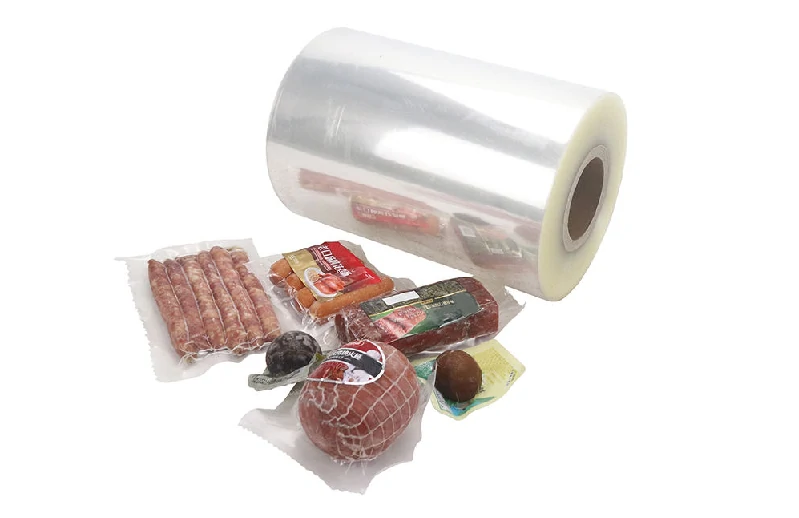
A typical coextruded frozen food bag has four to seven layers, and each one has a specific job:
- An outer structural layer (usually PET or PA) for strength and printability
- A barrier layer (EVOH) that blocks oxygen from passing through
- A tie layer that sticks EVOH to the PE next to it, because the two plastics do not bond naturally
- A sealant layer on the inside (usually LLDPE) that heat-seals cleanly and protects the food
Most plastic bags are made by gluing two or three films together and that is called lamination. The glue between layers can leave solvent residue, and over time the layers may peel apart — that is the “delamination” problem.
Coextrusion works differently. Instead of gluing separate films, the machine melts several plastics at the same time and pushes them through one die, so the layers are formed together in a single step. There is no glue between them.
Advantages:
- No solvent residue. No adhesive between layers, which matters during food safety audits.
- No delamination. The layers are formed in one step, so they never peel apart over time.
- Stable strength throughout shelf life. The bag keeps its mechanical performance the whole time it is on the shelf.
- Better oxygen barrier at a thinner gauge. You can sandwich a thin EVOH layer in the middle and get far better oxygen protection than a regular laminated bag at a similar total thickness.
- Good performance but cheap. You get high barrier bags but bag cost reduced.
Disadvantages:
- Requires custom tooling/dies, so setup cost is high.
- Minimum order quantity is much higher than adhesive-laminated bags.
- Not worth it for small test orders or short seasonal runs.
Vacuum Sealing Frozen Food Bags
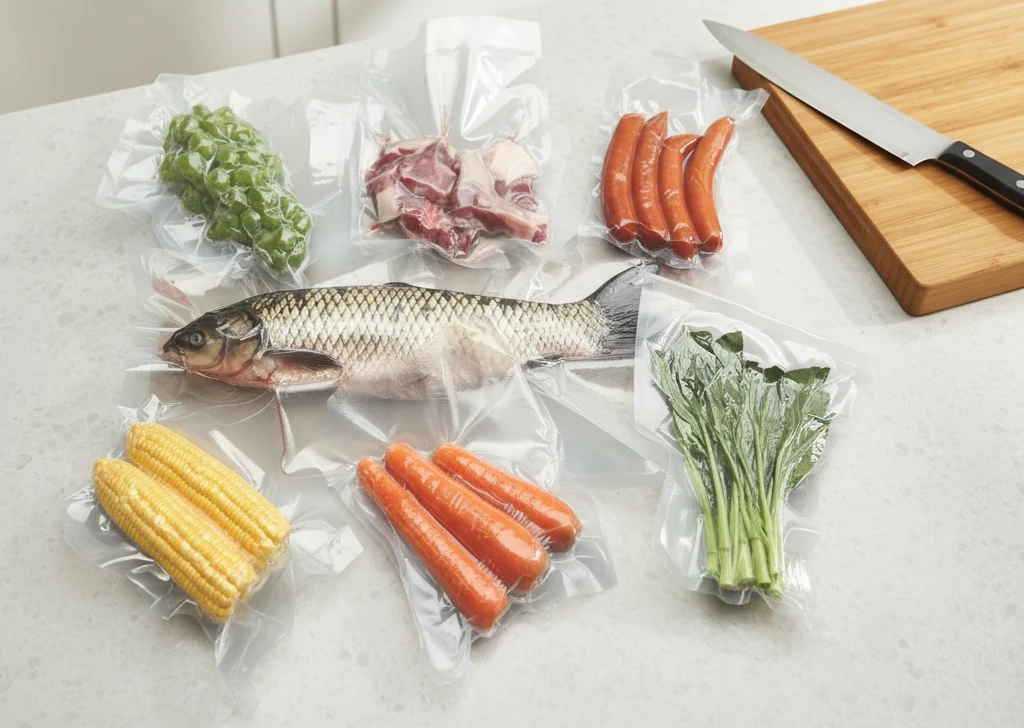
Vacuum packaging bags can be made of PA/PE composite bags or coextruded films with better performance, It is the most common and widely used type of frozen packaging.
Oxygen removal: Prevents fat oxidation, meat discoloration, and seafood rancidity.
Inhibits freezer burn:No moisture exchange inside the bag
Products are tightly secured: Prevents shaking, impact, and friction during transport.
Good for small business: ranging from a few hundred to a few thousand US dollars, much cheaper than MAP systems.
Related research: Vacuum sealing combined with an antimicrobial system extended raw meat shelf life at −20°C to 90–120 days, compared to weeks under normal sealing [2] .
Vacuum Frozen bag thickness
| Product Type | Recommended Thickness |
|---|---|
| Frozen vegetables, soft foods | 70–80 µm (≈3 mil) |
| Frozen minced meat, boneless meat slices | 80–90 µm (≈3.5 mil) |
| Meat with bones, shell-on seafood | 100–120 µm (4–5 mil) |
Tips: 1 mil = 25.4 Microns = 0.0254 mm
Modified Atmosphere Packaging for Frozen Foods
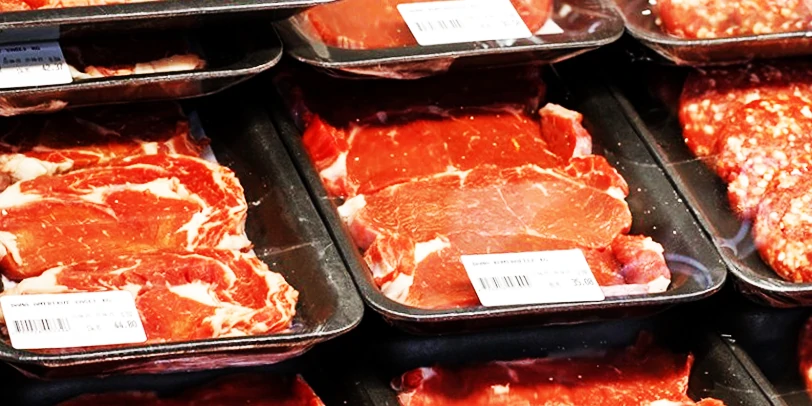
MAP setups use a rigid plastic tray sealed with a lidding film on top.
Before sealing, the air in the container needs to be removed, and then a layer of mixed gas prepared according to the product needs to be filled in before sealing.
| Product | Gas Mix Ratio |
|---|---|
| Cooked poultry (Chicken / Duck) | 70% N₂ + 30% CO₂, O₂ ≈ 0% |
| Frozen red meat / Masterpack long shelf life | High CO₂ (60–100%) + balance N₂, near 0% O₂ |
| White fish / Crustaceans (Shrimp, Crab) | 30% O₂ + 40% CO₂ + 30% N₂ |
| Oily fish (Salmon, Mackerel) | 40% CO₂ + 60% N₂, O₂ ≈ 0% |
| Cooked / Processed seafood | 30% CO₂ + 70% N₂ |
| Ready meals / Prepared dishes | 30–50% CO₂ + 50–70% N₂, O₂ ≈ 0% |
Related research: MAP shrimp has been shown to stay stable for about 9 months at −17°C [1] , Data from: Air Products, Beef Research
MAP (Modified Atmosphere Packaging) is a more technically advanced option, and it makes the most sense for higher-value frozen foods.
The gas mix inside holds the product’s color for months while the package sits in a supermarket freezer case.
MAP is filled with a pre-mixed gas, therefore requiring extremely high airtightness of the overall packaging
Remarks: CO2 inhibits the growth of bacteria and mold, while the inert gas N2 acts as a filling gas to support the bag.
Super low oxygen transmission rate (OTR)
The gas flushed inside the pouch needs to hold steady for months. If the film lets oxygen pass through easily, O₂ seeps back in within weeks while all the CO₂ escapes. That makes your MAP setup completely useless. This is why MAP lidding film has to be co‑extruded film with EVOH.
Strong and consistent heat seals
There’s pressure building up inside MAP packs. Any weak spot on the seal will make the pouch bulge and leak. Seals here need to be 30–50% stronger than seals on regular bags.
Anti‑fog treatment
Big temperature differences on frozen packs make water fog up on the inner film surface, hiding the product from view. To keep the goods looking good for sale, MAP lidding film usually gets an anti‑fog coating to stop this from happening.
Apply an anti-fogging agent to the inner surface of the cover film: sorbitan ester, ethoxylated sorbitan ester, glyceryl ester
They can reduce the surface tension of water, allowing it to spread into a continuous, transparent film instead of shrinking into droplets.
Vacuum Skin Packaging for Frozen Food
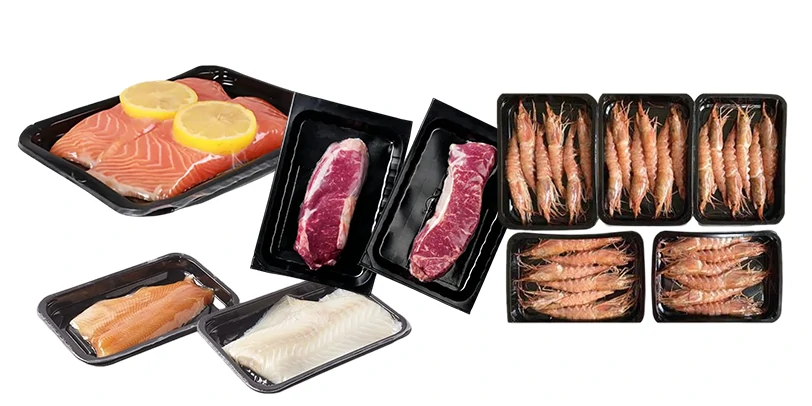
VSP sits at the top tier for premium frozen food packaging bags, They uses two parts: a skin film and a rigid PP bottom tray. When vacuum gets pulled, the plastic film hugs the item tight like a second skin, following every curve of the product. The edges of the film then seal firmly to the rim of the tray.
3D stereoscopic display of product appearance allows consumers to clearly see the food quality.
Perfect barrier performance. It has the same extended shelf life function as MAP
Perfect for high-value food. High-end steaks, Wagyu beef, sliced salmon, and premium frozen products
Lock in the juices. The film adheres tightly to the surface of the meat to prevent juice loss. No blood will seep out when you open the tray after purchase.
Tips: A phenomenon known in the industry as “purge loss”. Therefore, a pad to absorb blood is usually placed under the meat in MAP.
Limitations of using VSP
Expensive Equipment: Skin packaging machines cost hundreds of thousands to millions of RMB, 5-10 times more expensive than vacuum chamber machines.
Expensive Film: Skin packaging film is 2-3 times more expensive than regular vacuum bags.
Low Capacity: Skin packaging machines can only process a few pallets per minute, much slower than VFFS vertical machines.
Packets are an Additional Cost: PP trays are more expensive than skin packaging film itself.
Tips: If you want to pack 10kg frozen products, using VSP directly increases costs several times over.
Truth about recyclable frozen Packaging
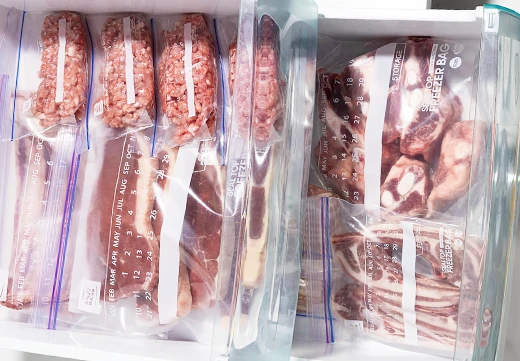
If you value the freshness, flavor, and quality of the ingredients, the suggestion is only use recyclable frozen food packaging bags for short-term storage. In the flexible packaging industry, the main recyclable materials are PE and PP.
As discussed above, PE has poor oxygen barrier properties; using it for frozen meat, seafood, and fatty products will result in oxidation, off-flavors, and severe freezer burn within weeks.
PP becomes brittle at low temperatures, and its heat-sealing strength decreases, making it unsuitable as well.
PBAT/PLA sustainable frozen food packaging
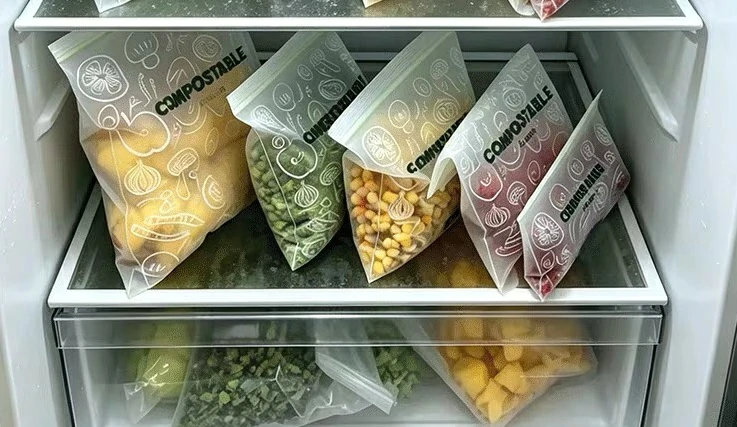
PBAT/PLA blend resin is the mainstream choice for compostable frozen food bags today, but there are a few things you should know before you spec one.
PLA & PBAT Features: PLA becomes brittle below room temperature. Research on coextruded biodegradable films found that PLA has almost no impact resistance at −25°C, while PBAT stays flexible down to about −34°C [2].
PLA & PBAT blend resin. PLA gives the film its “bones”—stiffness, printability, and some barrier. PBAT gives it the “muscle” — flexibility, impact resistance, and low-temperature toughness.
The typical blend is about 40–50% PLA and 50–60% PBAT. At this ratio, the film can work normally at −18°C
Compostable frozen bags defects
Poor oxygen and moisture barriers. That means it is only suitable for products with a short shelf life, like frozen vegetables and frozen dough. It is not a good choice for frozen meat — you will get freezer burn.
Not Strong enough. It will not hold up for frozen seafood, where shells and bones can punch straight through the film.
Much Higher Price. PBAT/PLA bags cost roughly 2 to 4 times more than a regular PE frozen bag.
Tips: After use, it needs to be properly placed in the food waste bin so that it can be decomposed using an industrial composting condition.
Conclusion
Choosing the right frozen goods packaging really comes down to matching three things: your product, your shelf life, and your budget.
For most frozen meat and seafood, a PA/PE vacuum bag is the reliable, cost-effective workhorse. If you need longer shelf life for export or premium retail, step up to MAP with an EVOH barrier film and anti-fog coating. If your product is high-end steak or salmon sold online, VSP gives you the premium presentation that your price tag deserves.
And if eco-friendly frozen food packaging is a hard requirement, PBAT/PLA works — but only for short-shelf-life items like frozen vegetables, and expect to pay two to four times more.
There is no single best frozen food packaging. The right choice depends on what you are packing, how long it needs to last, and who is buying it.
Send us your product type, target shelf life, and destination market. We’re professional frozen food packaging manufacturers and can offer custom frozen food packaging solutions.
Sources
- Adhikary, B. et al. (2026). Frozen food packaging: recent technological advances and future perspectives. Frontiers in Sustainable Food Systems, 10. DOI: 10.3389/fsufs.2026.1891260
- Apicella, A. et al. (2023). Tailor-made coextruded blown films based on biodegradable blends for hot filling and frozen food packaging. Food Packaging and Shelf Life, 37, 101096.
Need Custom Frozen Food Packaging?
Frequent Ask Question
Select a category below to view related questions and answers
Can I boil frozen food bags?
It depends on the bag. Standard PA/PE frozen bags are not designed for boiling. If your product needs boil-in-bag convenience, you need a retort-grade nylon structure that can handle 100°C water.
How long does frozen food really last in a properly sealed bag?
At −18°C, a good bag keeps food safe almost indefinitely — the limit is quality, not safety. Fatty meats and seafood start to taste off after 6–12 months. Lean meats last 12–18 months. Frozen vegetables keep 8–12 months. If you see freezer burn before those timelines, your bag's oxygen and moisture barrier is too weak.
What are the price differences in these frozen food packaging?
From cheap to expensive: PE bags, laminated bags, coextruded film bags, MAP, PBAT/PLA biodegradable bags, VSP
Can I use freezer bags to pack frozen fish?
Use a PA/PE vacuum bag at minimum. For oily fish like salmon, add an EVOH layer. For premium retail fish, go MAP or VSP.
What Our Clients Say
I am very happy with our purchase! It’s exactly what we wanted. We will be using them again for future orders.
Leo Carter
United States
Excellent supplier and very good service. The customized packaging was exactly how I requested and the quality was great. Communication was fast and clear during the whole process. Products arrived on time and were well packed. Very professional and reliable seller. I am very happy and will order again. Highly recommended!
Mia Robinson
Canada
MakePac was amazing to work with. Super quick to respond, really patient with all my questions and very kind!
The pouch bags turned out exactly as described. No issues at all. Production was fast, delivery was quicker than expected and the quality is honestly excellent. Would recommend this company and will definitly be purchasing again 🙂
Sophia Lewis
Australia
I have been working with MakePac for a long time now, and I cannot recommend them highly enough. They are consistently professional, reliable, and always finds solutions to any challenges that arise.
Emma Walker
United States
Thank you to the seller for the care and professionalism — highly appreciated! My requirements were fully met, and the order was completed successfully.
I’m very satisfied with the cooperation. The process was smooth and efficient, with no difficulties at all. Everything worked perfectly.
Ava Hall
Canada
Absolutely amazing services! great communication and even BETTER quality bags 🙂
Highly recommend for any business out there!
Lucas Harris
United Kingdom
This company delivered my product in emphatic style. from the vision to the finished product. jus wow. it has blown my mind. I was going for a shelf killer. when you see the shelf when my product is on there next to all the other massive brands.
Oliver Martin
Germany